



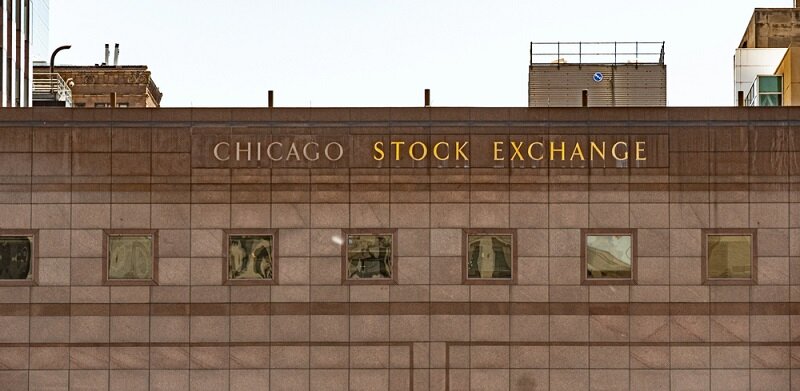
Chicago Stock Exchange (CHX) was the third-largest stock exchange in the United States and the largest non–New York-based equity trading venue by volume. One of the oldest regional exchanges in the country, it evolved from a traditional floor-based marketplace—where brokers executed trades in person—into a fully electronic platform that became part of the NYSE Group. Its 143-year history concluded on March 28, 2025, with its rebranding as NYSE Texas, headquartered in Dallas.
History of the Chicago Stock Exchange
The Chicago Stock Exchange was founded on March 21, 1882. Its first president was financier Charles Enrotten. The exchange officially opened for trading on May 15 of the same year. Its establishment reflected Chicago’s economic prominence: by the late 19th century, the city had become a major transportation, industrial, and financial hub of America’s Midwest.
Initially, the exchange listed stocks and bonds of companies active in industry, railroads, utilities, and other key regional sectors. Trading occurred physically on the exchange floor, where brokers represented clients, announced buy and sell orders aloud, and negotiated prices directly with counterparties.
In 1894, the exchange moved into a new building at the corner of Washington and LaSalle Streets. Designed by renowned American architects Dankmar Adler and Louis Sullivan, the structure later became an iconic example of the Chicago School of architecture. Although the building was demolished in 1972, its entrance arch and portions of the trading floor were preserved. The reconstructed trading room is now housed at the Art Institute of Chicago.
A pivotal development came in 1949, when the Chicago Stock Exchange merged with the Cleveland, St. Louis, and Minneapolis–St. Paul exchanges. The combined entity was named the Midwest Stock Exchange—the primary continuing organization—with its headquarters remaining in Chicago. Later, the New Orleans Stock Exchange also joined the group.
Throughout the second half of the 20th century, the exchange gradually transitioned from open-outcry trading to electronic systems. Automation improved order matching speed, reduced execution time, and enabled participation by firms located outside Chicago.
In 1993, the Midwest Stock Exchange reverted to its original name, Chicago Stock Exchange. The change took effect officially on June 11, 1993. It reaffirmed the exchange’s historic ties to the city—even though by then it already operated as part of the national electronic securities trading infrastructure.
CHX traded not only shares of local companies but also stocks primarily listed on other U.S. exchanges—and some over-the-counter securities. It held registered national securities exchange status and functioned as a self-regulatory organization (SRO), subject to oversight by the U.S. Securities and Exchange Commission (SEC).
Role in the U.S. Financial System
The Chicago Stock Exchange ranked well behind both the New York Stock Exchange and Nasdaq in terms of trading volume and number of primary listings. Yet its significance extended beyond scale.
Regional exchanges like CHX provided additional order execution venues and intensified competition among trading platforms. The same security could trade simultaneously across multiple exchanges, allowing broker-dealers to route orders to the venue offering the best price or execution quality at any given moment.
Thus, the Chicago Stock Exchange became part of the decentralized U.S. equity market structure. It complemented the largest national exchanges, added liquidity, and fostered competitive pricing and execution practices across the industry.
The exchange also performed regulatory functions for its members. As an SRO, it set its own trading rules, supervised registered brokers, and ensured compliance with federal securities laws.
Acquisition by ICE
By the early 21st century, independent regional exchanges faced mounting pressure competing against large, integrated exchange groups with proprietary technology platforms, market data distribution systems, and global infrastructure.
In April 2018, Intercontinental Exchange (ICE) announced an agreement to acquire the Chicago Stock Exchange. ICE already owned the New York Stock Exchange and several other trading and clearing venues. The acquisition closed on July 18, 2018; financial terms were not publicly disclosed. Following the deal, CHX continued operating as a registered national securities exchange.
On February 15, 2019, CHX was formally renamed NYSE Chicago. It joined the NYSE Group’s suite of electronic equity markets—including NYSE American, NYSE Arca, and NYSE National.
Integration into ICE gave the exchange access to NYSE’s shared technology infrastructure and consolidated market data. However, it effectively ceased to exist as an independent regional institution. NYSE Chicago became one of several electronic execution channels for U.S. equities.
Modern Era: From NYSE Chicago to NYSE Texas
In its final years, NYSE Chicago operated as a fully electronic exchange—without a physical trading floor or voice-based order announcements. Buyers and sellers submitted orders via electronic systems, and the platform automatically matched compatible bids and offers.
This format allowed brokers and institutional participants to use NYSE Chicago as an alternative venue for executing equity trades on the U.S. market. It was fully embedded within the NYSE Group’s infrastructure and relied on common technological and informational solutions.
However, the NYSE Chicago brand no longer exists. On March 28, 2025, it was restructured as NYSE Texas. Its legal registration and headquarters were relocated to Texas, with Dallas serving as its primary operational base.
NYSE Texas retains its predecessor’s fully electronic model. It trades securities included in the U.S. National Market System, matches orders based on price-time priority, and operates on the NYSE Pillar trading platform. In addition to order execution, it now offers issuers a dedicated venue for initial or follow-on public listings. Therefore, NYSE Texas is the direct institutional successor to the Chicago Stock Exchange.
The name, legal domicile, and geographic center of operations changed—but the technological foundation and organizational continuity remain intact.
Key Facts and Legacy
- The Chicago Stock Exchange operated from 1882 to 2025—approximately 143 years—and changed its official name three times.
- It is often confused with the Chicago Board of Trade (CBOT) and the Chicago Mercantile Exchange (CME). These are separate entities: CHX focused exclusively on equities and other equity-related securities.
- The exchange also left a lasting mark beyond finance—in architecture. Though Adler & Sullivan’s original building was demolished, the reconstructed trading floor and entrance arch remain on display at the Art Institute of Chicago, offering a glimpse into the golden age of American regional exchange trading.
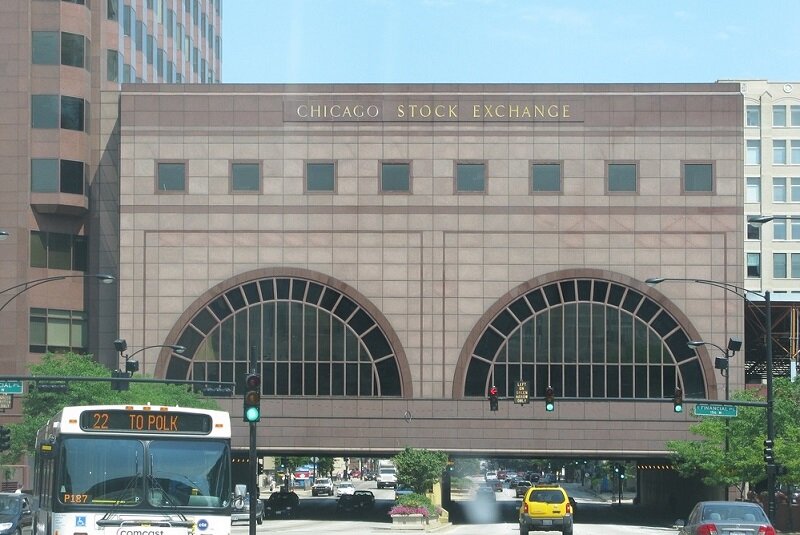
The history of the Chicago Stock Exchange illustrates the evolution of the U.S. equity market. In the late 19th century, exchanges served localized economies. During the 20th century, consolidation and automation accelerated. In the 21st century, many formerly independent venues were absorbed into multinational exchange conglomerates.
Though CHX never rivaled NYSE or Nasdaq in trading volume, it played a vital role in advancing regional equity access and electronic trading innovation. Its transformation into NYSE Texas marks not a closure—but a continuation: the exchange departed Chicago, yet its infrastructure, technology, and market function live on in a new state and under a new name.
“,
“excerpt”: “The Chicago Stock Exchange (CHX) operated from 1882 to 2025—143 years—as a major U.S. regional equity venue before becoming NYSE Texas.”,
“slug”: “chicago-stock-exchange-chx-history-evolution”,
“short_description”: “History and legacy of the Chicago Stock Exchange (CHX), from 1882 founding to its 2025 rebranding as NYSE Texas.”,
“faq_html”: “
FAQ
What was the Chicago Stock Exchange (CHX)?
A historic U.S. regional stock exchange founded in 1882, later acquired by ICE and rebranded as NYSE