


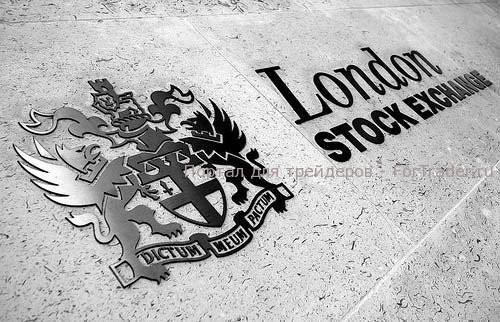
London Stock Exchange (LSE) is a major stock exchange headquartered in London, officially founded in 1801 — though its origins trace back much earlier. It ranks among the world’s oldest and most influential equity trading venues. Over centuries, the LSE has endured building relocations, name changes, terrorist attacks, and fires — yet remains a global leader in equity markets.
Origins in a Coffeehouse
The story of London’s premier stock exchange begins in 1571, when merchant Thomas Gresham — with royal approval from Queen Elizabeth I — established the Royal Exchange in London, modeled after the Antwerp Bourse.
Initially, the Royal Exchange dealt only in commodities, and stockbrokers — deemed socially undesirable due to their boisterous conduct — were barred from entry. They relocated to nearby coffeehouses: Jonathan’s and Garraway’s, where speculative trading flourished outside formal settings. By the 17th century, brokers had secured space in the rebuilt Royal Exchange. Parliament soon intervened, introducing strict licensing and capping the number of brokers at 100.
These restrictions drove many traders back onto the streets. A more organized group responded by constructing their own dedicated exchange — which opened its doors on 30 December 1801. From that point, the London Stock Exchange advanced rapidly in trading volume and market capitalization, even amid the devastation of two world wars. It adopted its current name — London Stock Exchange — in 1991, shortly before transitioning to electronic trading and becoming a publicly listed company whose shares trade on the LSE itself.
LSE Activities and Market Reach
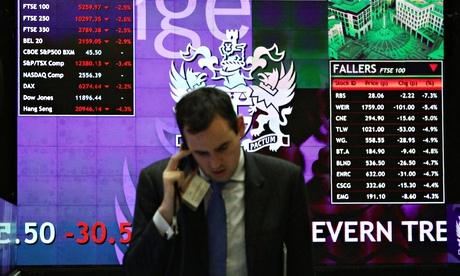
The London Stock Exchange is the most international equity trading venue globally. Over 50% of all worldwide equity trading volume occurs on the LSE.
More than 3,000 securities are traded on the LSE, including the largest number of foreign-listed equities worldwide. The exchange also holds the second-largest position globally for futures and options trading.
Securities traded include equities, bonds, Eurobonds, and investment funds (OEICs).
As of the latest data, the LSE’s market capitalization stands at $3.5 billion — making it the third-largest stock exchange globally by market cap, behind NYSE Euronext and NASDAQ. Notably, NASDAQ attempted a hostile takeover between 2005 and 2007, acquiring a 28% stake in the LSE. However, the LSE board rejected all offers. NASDAQ later sold its stake to Borse Dubai, ending the acquisition effort.
Modern LSE Market Structure
London Stock Exchange (LSE) operates across three primary markets:
- Main Market — hosts equities of leading global companies; approximately 1,500 issuers from over 60 countries.
- Alternative Investment Market (AIM) — a fast-growing segment designed for high-potential but less-established companies, with lighter listing requirements than the Main Market.
- techMARK — a dedicated market segment for high-growth technology firms.
FTSE 100 Index: Barometer of the UK Economy
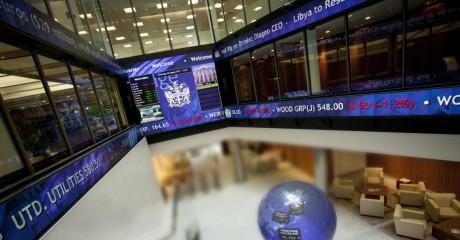
The FTSE 100 is the LSE’s flagship index, launched jointly with the Financial Times in 1984. Market participants widely regard it as the primary indicator of UK economic health.
Major constituents include BHP Billiton, Vodafone, HSBC, Royal Dutch Shell, British American Tobacco, and Russian mining giant Evraz. Collectively, FTSE 100 companies account for around 80% of the LSE’s total market capitalization.
Trading hours on the LSE run Monday–Friday from 08:00 to 16:29 GMT. The FTSE 100 closing price is calculated at 16:35 GMT.
Real-time quotes are available online via the official LSE website: londonstockexchange.com
FAQ
When was the London Stock Exchange founded?
Officially incorporated in 1801, though informal trading began in London coffeehouses in the 17th century, following the 1571 establishment of the Royal Exchange.
What is the FTSE 100?
A benchmark index of the 100 largest UK-listed companies by market cap, launched in 1984 — widely used as a barometer of UK economic performance.
How does the LSE compare globally by market cap?
With ~$3.5 billion market cap, the LSE ranks third globally — behind NYSE Euronext and NASDAQ — and leads in foreign equity listings and international participation.