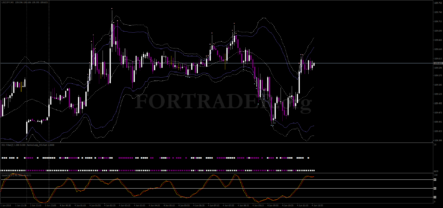
Japanese yen pairs on Forex, like USD/JPY and GBP/JPY, trade with unique quoting conventions, high volatility during Asian sessions, and sensitivity to global risk sentiment, making them ideal for carry trades and trend-following strategies.
Brief History of the Japanese Yen
The Japanese yen was introduced during the Seiji era and initially equated to 1.5 grams of gold. The gold standard was abolished and reintroduced several times based on Japan’s economic conditions. In May 1953, it gained international currency status, with the IMF setting its parity at 2.5 mg of gold. From 1949 to 1971, the yen’s rate was fixed to the US dollar at 1 USD = 360 JPY. Through several revaluations linked to the dollar and other global currencies, the yen’s value rose substantially.
As a reserve currency, the Japanese yen traditionally ranked second after the dollar, though its role has somewhat declined recently. It accounts for about 4% of countries’ gold and foreign exchange reserves.
Japanese Yen on Forex
As a freely convertible currency, the yen’s Forex rate is determined by supply and demand levels. On Forex, the yen competes effectively with the British pound and Swiss franc, representing 12% of total market turnover.
Several factors drive the yen’s popularity on Forex:
- Bank of Japan’s low interest rate of 0.1%, enabling its use as the quote currency in carry trade strategies.
- Major yen movements occur during the Asian trading session, corresponding to nighttime in Europe, minimizing European news impacts.
- Relative affordability: buying 1 standard lot of USD/JPY with 1:100 leverage costs around $1000 at current quotes.
- High volatility during the Asian session provides profit opportunities.
- Japan’s status as a major global exporter leads the government to pursue policies weakening the yen.
The Japanese yen is traditionally viewed as a safe-haven currency. During global instability, investors shift capital to yen, strengthening it due to Japan’s stable economy and position as a top global creditor. Unlike emerging market currencies, the yen is seen as a relatively safe asset, especially amid rising stock market risks.
Key Features of Trading Yen Pairs
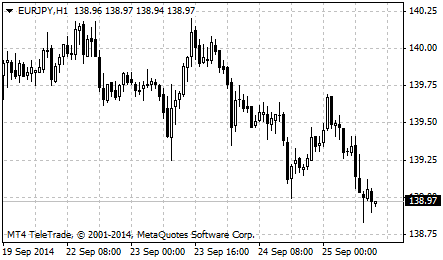
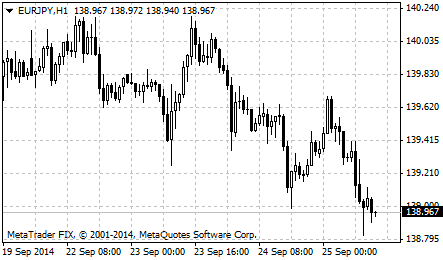
Unlike standard quotes of 0.0001 (four-digit) or 0.00001 (five-digit), yen pairs use two fewer decimals. For example, EUR/JPY quotes as 138.97 on four-digit brokers or 138.970 on five-digit brokers.
- In currency pairs, the yen is the quote currency, so positive yen news or data lowers the pair’s value, and vice versa.
- Popular Forex yen pairs include USD/JPY, EUR/JPY, GBP/JPY, and AUD/JPY, all highly volatile. GBP/JPY can move 200 pips in a session.
- The European session is optimal for yen pairs: it’s daytime in Europe, Russia, Ukraine, and Belarus, and Bank of Japan avoids interventions then.
- Focus on export/import volumes, energy prices, inflation data, and Japan’s economic/political events.
Additional Trading Characteristics of JPY Pairs
The yen is highly sensitive to global market sentiment. It strengthens during panic and stock index declines but weakens in risk-on environments favoring stocks and commodities. This suits trading risk-on/risk-off shifts.
Technically, yen pairs show clear impulses, sustained trends, and consolidation phases. They respect support/resistance levels and trend indicators, but news-driven spikes need wider stop-losses and careful position sizing.
Common errors include underestimating volatility (especially crosses), ignoring macro factors and Bank of Japan statements, and miscalculating position sizes due to quoting differences.
JPY pairs fit traders blending technical and fundamental analysis, suiting intraday and medium-term strategies, but challenge beginners without volatility experience. Discipline and risk management are crucial.
FAQ
Why is the Japanese yen a safe-haven currency?
Investors flock to yen during global uncertainty due to Japan’s stable economy and creditor status, strengthening it against riskier assets.
What are the best times to trade yen pairs?
European sessions offer optimal conditions: daytime trading hours and no Bank of Japan interventions, reducing sudden moves.
How does yen quoting differ from other pairs?
Yen pairs use two fewer decimals (e.g., 138.97 vs. 1.3897), affecting pip values, position sizing, and stop-loss calculations.