




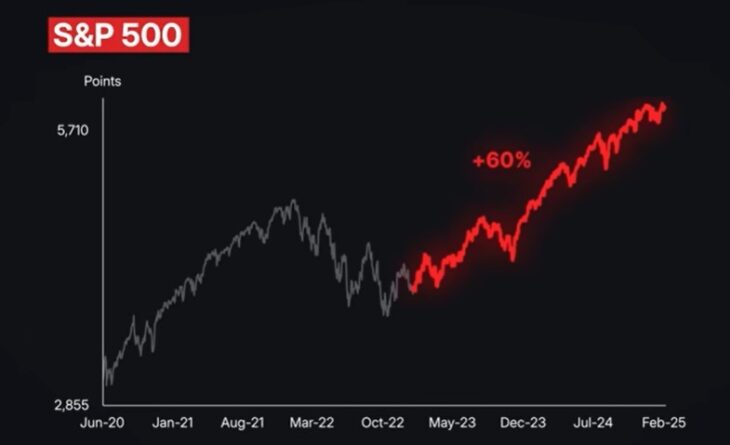
The U.S. stock market has surged 60% over the past two years—one of the most powerful rallies in American market history. Achieving similar returns previously took 20 years (1965–1985) and 15 years (1996–2011). Yet this extraordinary growth masks a troubling economic reality: 30% of Americans live paycheck to paycheck at record levels, and consumer sentiment sits near 30-year lows comparable to the financial crisis. This is not a banking crisis but a wealth inequality crisis, driven by money flowing at record speeds from the real economy into financial assets.
What Triggers Market Corrections?
A 60% stock market increase over two years has occurred only four times in U.S. history: 2021, 2011, 1996, and 1987. In three of these four cases, the market peaked and then experienced a correction of approximately 20%. A 20% decline today would return the market to late 2021 levels. However, major corrections require an economic trigger.
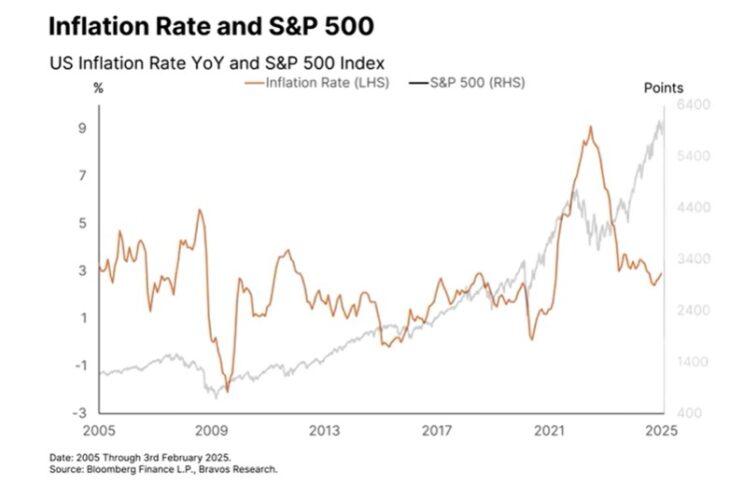
The key factor determining whether the market continues rising or reverses is inflation. In 2021, 2011, and 1987, inflation sharply rose from low levels to 4% or higher, followed by market corrections. In 1996, by contrast, inflation was falling, and the market continued climbing until 2000.
Currently, U.S. inflation is trending downward, supporting further stock market growth. Despite analyst predictions of renewed price increases, recent data shows inflation continuing to decline. This trend is especially evident in rent prices, which are falling for the first time since the financial crisis. Since rent payments comprise a large portion of the Consumer Price Index (CPI)—the primary inflation measure—declining rents significantly impact overall inflation calculations.
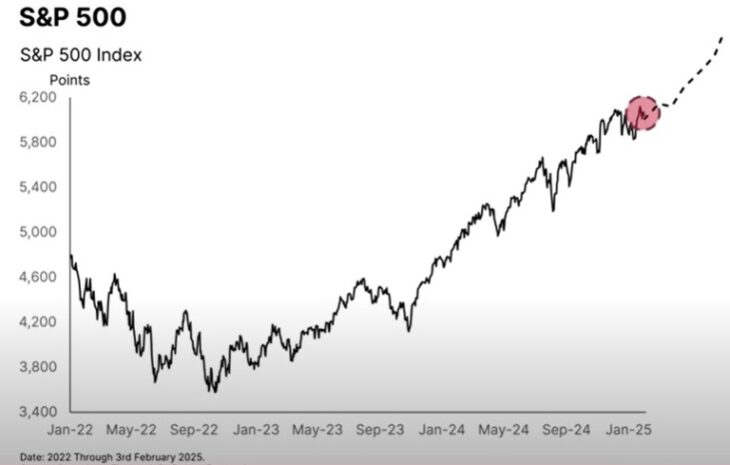
If this trend persists, low inflation could allow the stock market to continue rising through mid-2025.
Low Inflation Does Not Signal Economic Health
Low inflation does not indicate a healthy economy. Rather, it signals structural problems in an economy suffering from high inequality. Current conditions reflect:
- Low consumer confidence in the economy
- Shrinking household savings paired with rising debt levels
- Consumers unable to afford higher payments without massive government support, such as pandemic-era aid
While average Americans face financial strain, corporate profits remain at historic highs. Currently, 133% of U.S. GDP growth is driven by corporate earnings—meaning all economic growth converts into corporate profits, which are then reinvested into financial assets, pushing the market upward.
Market Outlook and Investment Strategy
As long as inflation remains low, the stock market can continue rising. Analysts have already opened new long positions in U.S. stocks with high growth potential in the coming weeks.
Key Takeaways
- The U.S. stock market has grown 60% in two years—a rare historical occurrence
- Inflation is the primary factor influencing continued growth; low inflation supports further market gains through mid-2025
- Low inflation reflects economic inequality rather than health: household savings are falling while corporate profits grow
- Continued stock market growth is expected in the coming months as long as inflation remains controlled
- This rally masks fundamental economic challenges, including record household debt and low consumer confidence
FAQ
Why has the stock market surged 60% in two years?
The rally is driven by robust corporate profits being reinvested into financial assets, combined with falling inflation that supports continued equity valuations. Currently, 133% of U.S. GDP growth converts into corporate earnings, fueling stock market gains.
Is low inflation a sign of economic health?
No. Low inflation in this environment reflects economic inequality and weakness: household savings are shrinking, debt is rising, and consumers lack confidence. It indicates structural problems rather than a healthy economy.
What could trigger a market correction?
A sharp rise in inflation from current low levels would likely trigger a correction. Historical precedent shows that when inflation rises to 4% or higher after extended low periods, the stock market typically corrects by approximately 20%.