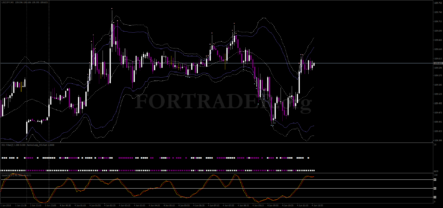





This Forex trading strategy combines the MACD and Stochastic Oscillator indicators to identify medium-term trends and profitable entry points on the H1 timeframe.
Strategy Parameters
Market: Forex
Currency Pairs: Any
Indicators: Stochastic Oscillator, MACD
Trading Style: Indicator-based
Timeframe: H1
Protective Orders: Stop Loss, Trailing Stop
Core Strategy Rules
The strategy uses the NZD/JPY cross pair as an example. After a 24-hour decline, an uptrend emerges as both Stochastic and MACD turn upward.
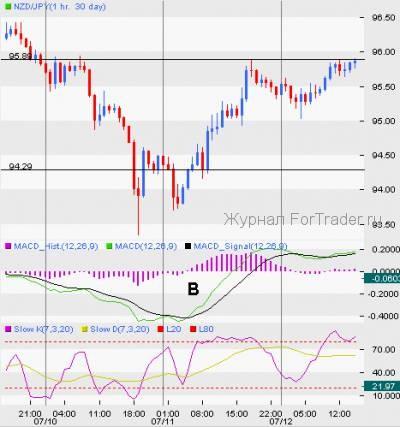
Apply Stochastic Oscillator with settings 7, 3, 20 and standard MACD to the chart. Identify the trend when Stochastic’s D% line turns upward, confirmed by MACD growth or crossover, which reveals the longer-term direction.
Enter trades in the confirmed trend direction. Here, both indicators signal an uptrend, so open a buy position at point B.
For the buy entry, open the position on the close of the H1 candle at 94.29 after conditions align. Set Stop Loss below the session low at 94.01 to follow risk management rules.
Use a Trailing Stop to lock in profits as the trade moves favorably, reducing risk from pullbacks or reversals. This trade yielded +159 pips before the trailing stop triggered.
Sell trades follow the same logic in the opposite direction.
Use Stochastic for shorter-term timing and MACD for overall trend confirmation in longer positions.
FAQ
What are the best Stochastic settings for this strategy?
Use 7, 3, 20 parameters on H1 charts to catch short-term momentum shifts aligned with MACD trend.
How do you confirm entries with MACD?
Look for upward line turn or crossover after Stochastic D% rises, ensuring both indicate the same trend direction.
When should you apply Trailing Stop?
Activate after profitable movement to secure gains while allowing room for the trend to continue without early exit.