




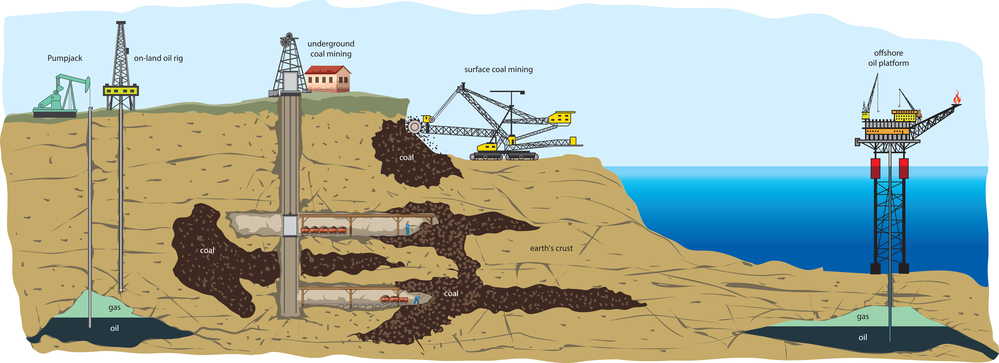
Shale oil is liquid hydrocarbons trapped in dense rock formations like shale, argillites, or sandstones, requiring advanced technologies such as hydraulic fracturing to extract unlike conventional oil from porous reservoirs.
This resource transformed the US from a major oil importer to a leading exporter, reshaping global energy markets through innovative drilling techniques.
Contents
- Types of Shale Oil
- Shale Oil Extraction
- Shale Oil vs Conventional Oil
- Shale Oil Economics
- Impact on Global Markets
- 5 Key Shale Oil Facts
Types of Shale Oil
Shale oil is a liquid hydrocarbon substance contained in dense rock formations such as shales, argillites, or sandstones. Unlike conventional oil that accumulates in large underground reservoirs and is easily extracted via wells, shale oil is locked in microscopic pores and fractures of the rock. It was previously impossible to produce.
In the modern energy industry, shale oil is classified into two types based on extraction methods:
- Tight Oil. This type consists of light fractions found in low-permeability formations, hence the name. It is extracted using hydraulic fracturing and horizontal drilling.
- Shale Oil. Extracted from kerogen—a substance in shale rock that converts into oil. Kerogen undergoes thermal processing directly in the well to produce shale oil.
Shale Oil Extraction
Two primary methods are used for shale oil extraction:
- Surface Extraction. Oil-bearing rock is brought to the surface and processed in specialized facilities to separate oil fractions.
- In-Situ Extraction at Depth. Used for deep formations, this involves horizontal drilling and injecting high-pressure water to create hydraulic fractures. Oil flows from the resulting cracks in the rock to the surface. Note that hydraulic fracturing poses risks including ground subsidence, seismic activity, and contamination of groundwater with oil and methane.
Combining these technologies has significantly reduced costs, making shale oil commercially viable. Since the early 2010s, the US has rapidly increased production to become an energy leader.
Shale Oil vs Conventional Oil
The key difference is that shale oil is dispersed in micro-fractures and pores rather than large underground reservoirs. This requires constant drilling of new wells, as existing ones deplete quickly—often within a year.
Chemically, shale oil is typically lighter with less sulfur than conventional oil, making it cleaner for refining but less stable during storage as it oxidizes faster.
Extraction is more expensive economically and environmentally, demanding vast amounts of water, chemicals, and energy, plus risks of groundwater pollution and increased seismic activity from fracking.
Shale Oil Economics
Production costs are higher than conventional oil. Profitability starts at around $45–60 per barrel depending on region and technology. Below this, many companies face losses.
However, the industry’s flexibility allows quick scaling of production. Rising prices prompt rapid new drilling, stabilizing markets. Shale oil acts as a buffer, smoothing price swings.
For the US, it created millions of jobs, attracted investments, and achieved energy independence, shifting from importer to exporter of oil and gas.
Impact on Global Markets
Shale oil reshaped the oil landscape. Previously dominated by OPEC countries, the market balance shifted with US production growth. Mass US exports drove global prices down.
The effect peaked in 2014 when the shale boom halved prices, forcing OPEC to adjust strategies and intensifying competition between traditional and new producers.
Western countries reduced reliance on Middle Eastern suppliers, altering economics and geopolitics.
5 Key Shale Oil Facts
- Fact 1. Global shale oil reserves are estimated at 300 billion barrels, with 24 billion in the US. At current consumption, they could last over 300 years.
- Fact 2. Economic viability requires at least 90 liters of oil per ton of shale and a formation thickness of 30 meters or more. Fewer than 1/3 of deposits meet these criteria.
- Fact 3. Modern technologies yield 0.5 to 1.25 barrels of shale oil per ton of oil-bearing shale rock.
- Fact 4. In the first year, shale wells produce far more oil and gas than conventional fields, but efficiency drops 80% afterward.
- Fact 5. Main production areas are Texas (Permian Basin), North Dakota (Bakken Formation), and South US (Eagle Ford), accounting for most global shale oil.
Despite challenges, shale oil’s potential is vast. Advancing technologies lower costs and improve safety, including “smart fracking” with automation, water recycling, and real-time data analysis.
Future growth is expected in the US, China, and Argentina. Russia considers expansion but faces high costs.
Shale oil supports the energy transition, providing flexibility as the world shifts toward greener sources while oil remains essential.
FAQ
What is the break-even price for shale oil production?
Profitability typically starts at $45–60 per barrel, varying by region and technology; below this, operations often turn unprofitable.
How does shale oil affect global oil prices?
US shale boom increased supply, driving prices down notably in 2014 and challenging OPEC dominance while stabilizing market volatility.
What are the main environmental risks of shale oil extraction?
Hydraulic fracking risks include groundwater contamination, seismic activity, ground subsidence, and high water/chemical use.