


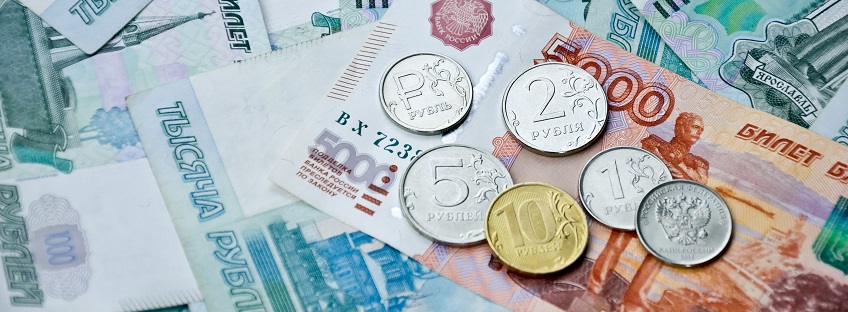
2018 will become a turning point crisis year for Russian currency. In the coming months, foreign capital flows that have provided substantial support to the ruble amid economic sanctions and falling oil prices will dry up. By the following year, capital flight will begin. This is the conclusion reached by economists from leading global investment banks surveyed by Bloomberg.
The Ruble May Lose Investment Appeal
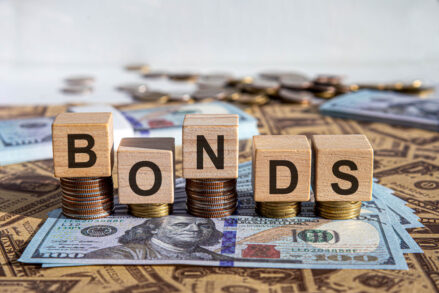
According to survey results, foreign funds that have invested approximately $15 billion in Russian OFZ bonds will lose interest in ruble-denominated assets in 2018 and begin closing their investments by selling Russian currency and unwinding carry-trade operations.
The main reasons cited for possible capital flight from Russia are low oil prices, expanding economic sanctions, and rising Federal Reserve interest rates.
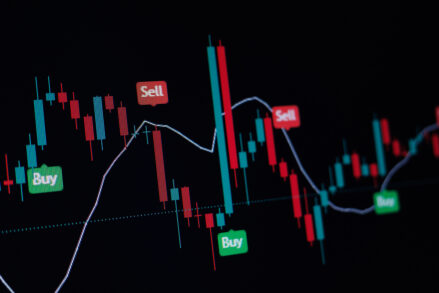
It should be noted that thanks to the strict policy of the Bank of Russia, the ruble became a favorite currency for speculators. By obtaining loans in dollars and euros at interest rates of approximately 1% per annum, banks and funds purchase ruble-denominated OFZ bonds with yields of 7.5% and higher. Meanwhile, a stable or even strengthening ruble allows them to withdraw these funds later and earn very high currency profits by global standards.
However, as the Central Bank of Russia lowers its interest rate while the Federal Reserve raises its own, the difference in interest rates narrows, making investments in ruble assets less attractive.
Following its September meeting, the Federal Reserve clearly indicated it would increase the cost of dollar borrowing in December and forecast three rate hikes in 2018. Additionally, the Federal Reserve began reducing its balance sheet, decreasing excess dollar liquidity that it had injected into markets following the 2008 crisis. Meanwhile, the Bank of Russia lowered its key rate to 8.5% per annum, the lowest level in three years, and stated that further rate cuts are possible in the coming quarters.
Ruble Carry-Trade Arithmetic Explained
Meanwhile, pressure on assets and securities of emerging market countries is mounting. The largest U.S. exchange-traded fund investing in emerging market debt and currencies has recorded steady outflows since July. During this period, clients have withdrawn $1.2 billion, forcing the fund to close positions.
It is highly likely that demand will continue to fall due to the gradual exit of global players from emerging market securities and geopolitical negativity toward Russia. This means the ruble could soon lose its appeal for carry-trade operations.
The real interest rate in Russia is among the highest in the world, standing at 5.3% per annum—the extent to which the Central Bank of Russia’s key rate exceeds the inflation level. The Federal Reserve’s interest rate, however, is slightly lower than the rate of price growth, so the real interest rate in the United States has a negative value.
Currently, the difference between the real interest rates of the Central Bank of Russia and the Federal Reserve stands at 5.85 percentage points. If this difference falls to 3.5 percentage points, investments in Russian assets will lose their appeal.
In other words, for carry-trade speculators to exit the ruble, the Bank of Russia does not necessarily need to lower its own rate. It would be sufficient for the Federal Reserve to raise its interest rate five times and for inflation in Russia to accelerate to 4.4%.
Currency Risks for the Ruble Remain
At the same time, risks associated with ruble investments have not disappeared. Dollar revenues in Russia depend on oil price dynamics by approximately 60%. This is already enough to make assets of some Central and Southeast European countries appear more attractive. A smaller interest rate differential, within 1-2%, is more than offset by significantly lower currency risks.
For the ruble, one of the key risk factors remains the possibility of new economic sanctions from the United States that would completely prohibit investment in the Russian debt market.
The U.S. Department of the Treasury has already been tasked with preparing the appropriate regulatory framework by March 2018. Need we say that if such sanctions take effect, carry-trade operations would be immediately halted and a massive capital outflow would begin?
Risks to the ruble are not limited to sanctions alone. In addition to sanctions and falling oil prices, risk factors include the situation with North Korea, Ukraine, and future presidential elections in Russia.
Conclusions
Some may find our analysis excessively pessimistic. In that case, we recommend paying attention to the long-term forecast of federal budget parameters prepared by Russia’s Ministry of Finance. It is based on chronic ruble depreciation.
According to the finance ministry’s forecast, the ruble’s decline will begin precisely in 2018. The baseline forecast assumes a 10% average decline in the ruble’s exchange rate every five years. However, the dollar exchange rate could exceed the 70 and even 80 ruble mark significantly faster if the United States strengthens sanctions against Russia and extends them to investments in Russian government debt.