


Money is one of humanity’s greatest inventions. Its origin and the beginning of its history date back to 7-8 thousand years BCE, when primitive tribes had surpluses of certain products that could be exchanged for other necessary goods. Historically, various items were used with varying success to facilitate exchange: livestock, cigars, shells, stones, and pieces of metal. However, to become a monetary equivalent, an item had to gain general recognition from both buyers and sellers as a medium of exchange.
Money is defined by society itself; whatever society recognizes as a medium of circulation is money. Indeed, money is a commodity that serves as a universal equivalent, reflecting the value of all other goods.
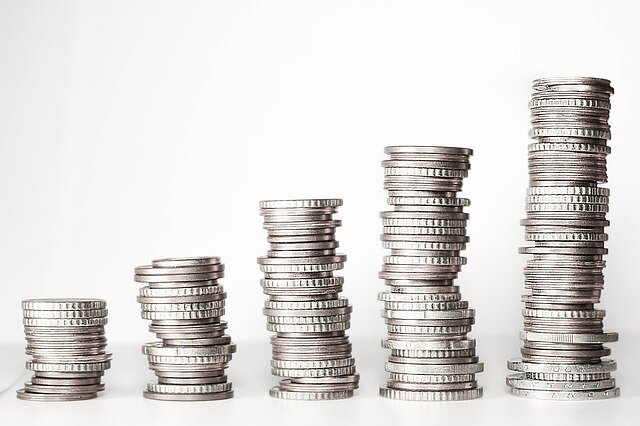
Main Stages in the History of Money Development
How did money originate? It went through four important stages:
- First stage – the emergence of money through random commodities performing their functions;
- second stage – gold being established as the universal equivalent (this was perhaps the longest stage);
- third stage – the transition to paper or credit money;
- and the final fourth stage – the gradual displacement of cash from circulation, leading to the appearance of electronic payment methods.
Gold and Silver as Money

Gold and silver best met the aforementioned requirements, so in the evolution of commodity exchange, a special, absolutely liquid commodity emerged, used as a universal equivalent of value for money. This commodity became gold and silver – the early form of metallic money.
Gold and silver appeared as money as early as the 13th century BCE in the form of various ingots with a specific weight of metal. As market relations developed further, coins – monetary signs with a legally established shape and full-weight metallic content – began to be minted from the metal. But the history of money did not end there.
Coins from the natural alloy of gold and silver (electrum) first appeared in the state of Lydia in the 7th century BCE. In Rus, coin minting began in the 9th-10th centuries. However, due to the absence of gold deposits in Kievan Rus, mainly foreign – Arab and Byzantine – gold and silver coins were used. Later, from around the 11th century, silver and copper ingots were used in domestic circulation. The most common was a silver ingot weighing one pound (about 400 g), called the grivna. But the “grivna” had quite a high value, so it was cut in half into two equal parts, which were called ruble or “ruble grivna”.
Commodity Money
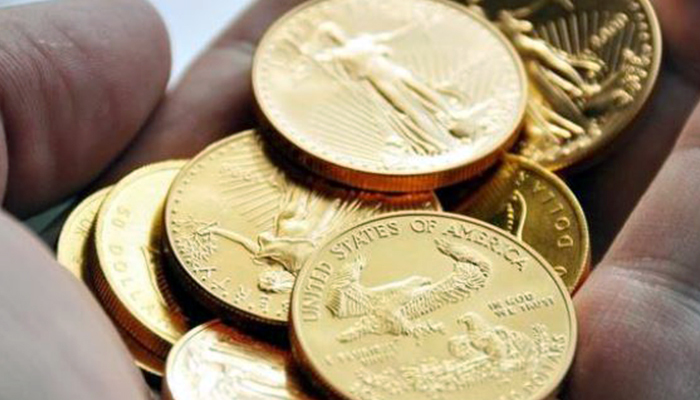
For the early form of metallic money, the commodity value of the metal contained in the coins coincided with their nominal value indicated on the face side of the coin.
This reveals one of the drawbacks of commodity money. If their value as a commodity exceeds their value as money, they cease to function. Indeed, if, for example, a ruble coin had silver (or gold, or any other) content worth, say, two rubles, it would be very profitable to melt it down and sell it as an ingot. Therefore, despite the illegality of such actions, ruble coins would disappear from circulation.
In connection with this, from around the 15th century, metallic money began to lose its commodity basis. Metallic coins started to be divided into full-bodied (whose nominal value corresponds to the value of the metal they contain) and non-full-bodied (whose nominal value exceeds the value of the contained metal). Currently, in no country in the world are metallic coins full-bodied.
History of Paper Money or Banknotes
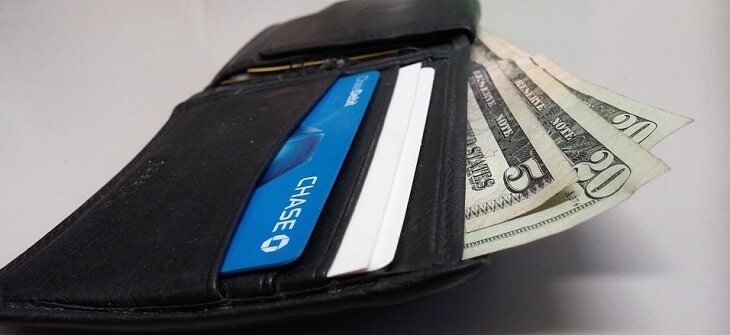
The origin of paper money (banknotes) deserves special attention. Where did they come from? What is the history of money? To answer this question, we need to turn to history again.
Soon after gold began to be used in transactions, it became evident that it was inconvenient and unsafe for both buyers and sellers to transport, weigh, and check the purity of gold every time a deal was made. Therefore, the practice emerged of depositing gold with goldsmiths who had special vaults and were ready to provide them for a fee. Upon receiving a gold deposit, the goldsmith issued a receipt to the depositor.
Soon, goods began to be exchanged for these receipts, which turned into an early form of paper money or banknotes, and the goldsmiths themselves became prototypes of modern bankers. Since the gold stored by goldsmiths in vaults was rarely demanded – that is, it was not in circulation – the receipts were full-bodied money, as their quantity exactly matched the amount of gold in storage.
This continued until some inventive goldsmith, seeing that the amount of incoming gold exceeded the amount withdrawn, began issuing receipts not backed by gold, providing loans to merchants, producers, and consumers at interest. This is how the fractional reserve banking system originated. These receipts were no longer full-bodied money. It is believed that English goldsmiths were the founders of banks and paper money. Later, the right to issue paper money passed from private hands to the state.
In Russia, paper money appeared in 1766 by decree of Empress Catherine II. They became the ruble and its hundredth part – the kopeck. Currently, just like metallic money, paper money in no country in the world has a commodity basis, meaning it is not exchangeable for gold or other precious metals. But the history of money does not end there. Their equivalents appear, and development continues apace.