

Currency exchange rates are one of the key concepts for players in the Forex market. Traders earn on the fluctuations of currency exchange rates. By buying a certain currency, a trader expects its rate to rise relative to another currency. Let’s break down how the exchange rate is formed, what it depends on, and what understanding its trends and making accurate forecasts can provide.

Official Currency Exchange Rates
There are official currency exchange rates. In our country, the Central Bank of the Russian Federation sets and publishes the rates of foreign currencies against the ruble. However, currency exchange rates at commercial banks usually differ from the Central Bank’s rate. Therefore, if you need to buy or sell currency, you have to do it at the rates of a specific bank, which, in turn, only orients itself on the Central Bank’s rates and sets its own exchange rate that is profitable for itself.
At the same time, currency quotes can change several times a day. Therefore, when people say that the currency exchange rate is an expression of the value of one currency in terms of another, it’s not entirely accurate. This definition must include – «at a specific point in time». This parameter is very important for a trader. After all, the profit depends on the moment when he bought and sold a particular currency.
Currency Exchange Rates on Forex
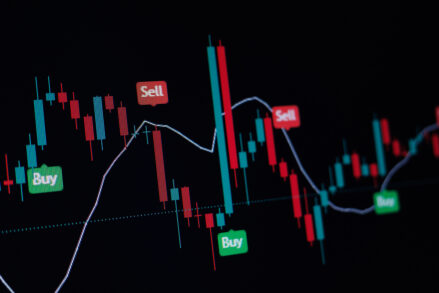
On the Forex market, they trade currency pairs. For example, the exchange rate of a currency pair «euro/US dollar» (EUR/USD) is at a certain value. Suppose the euro rate against the US dollar is 1.2705. This means that 1 euro is worth 1.2705 US dollars. On the terminal screen, you will see two prices. The lower price Bid (bid), at which you can sell euros and buy the corresponding amount of US dollars. The second price Ask (ask) is the price for buying euros and selling the corresponding amount of dollars.
Exchange rates on currency exchanges are formed based on the demand and supply for a specific currency. Understanding how and why this demand and supply is formed gives an undeniable advantage. A person capable of analyzing currency exchange rate fluctuations can not only buy or sell currency profitably. The currency exchange rate can be a tool for analyzing the economy of a country as a whole, not to mention a reliable guide when taking a loan or buying securities.
Currency Exchange Rate Fluctuations
Fluctuations in currency exchange rates depend on many factors. Several main ones are traditionally highlighted, which exert the strongest pressure on the weight of the national currency.
First of all, this is currency emission. If a state starts intensively printing money or increasing the money supply in circulation, for example, by issuing loans to banks, this leads to an increase in the supply of the national currency. And when the supply of currency begins to exceed demand, its rate falls.
Another important factor shaping demand and supply for the national currency is the foreign trade balance. The pattern is simple – the more exports in the country, the higher the demand for the domestic currency, and therefore, the higher its rate. Imports, on the contrary, create supply for foreign currency. Accordingly, more imports – lower currency rate.
There is also such a concept as trust in the currency. For example, if citizens of a country, seeking to protect their savings from risks associated with changes in the national currency rate, prefer to keep money in euros, this leads to an increase in demand for euros and an increase in its rate. Large companies have the same influence when choosing one or another currency for contracts.
But exchange rate movements can also be triggered by other factors. Everything from natural disasters to statements by influential politicians can strongly affect the rate. It is impossible to predict every movement, but if rate changes are not supported by real economic events, such movements are short-term.
Since current currency exchange rates are extremely important information, many informational sites publish operational currency rates on their pages. Usually, these are the most popular rates – the Central Bank euro rate and the Central Bank dollar rate against the ruble. Many sites also offer users to install a free currency rate informer on their computer. Thus, anyone interested can have an automatically updating information block on their desktop, displaying operational information about rates and trends in their changes.