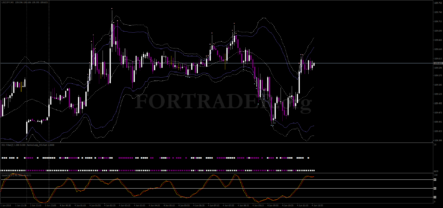




The Head and Shoulders trend reversal pattern has been the subject of numerous studies and publications. Authors compare it to Elliott wave structure, the accumulation and distribution process, which characterizes the activities of major players in the Forex market, and even develop reverse trading strategies based on the unviability of the ‘Head and Shoulders’ pattern in certain market conditions.

Overlooked Aspects of the Technical Analysis Pattern ‘Head and Shoulders’
As a proponent of harmonic trading and preferring to analyze in its classical understanding, I would like to draw attention to two important aspects that traders using the Head and Shoulders technical analysis pattern should not forget:
- Firstly, it can be broken down into parts, each of which is an important and independent element that allows identifying the preferences of market participants.
- Secondly, the use of harmonic trading principles helps identify key price levels that should be paid attention to.
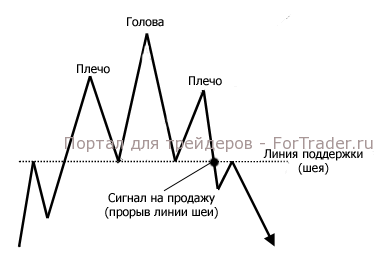
Later, a ‘1-2-3’ model is formed, which serves as the basis for applying the principles of harmonic trading.
Analysis of the Trend Reversal Pattern ‘Head and Shoulders’ by Parts
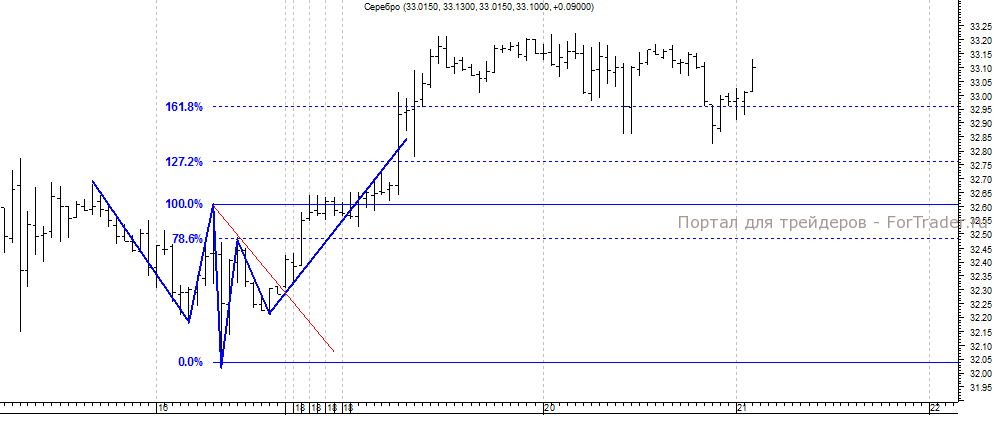
On the hourly chart of silver futures, a successful test of the 127.2% area, which was the initial target in the harmonic pattern ‘Perfect Butterfly’ (78.6% correction)’, opened the way upwards. At the same time, the 127.2% and 161.8% levels became support levels.
It is also worth highlighting the consolidation formed in the 100-127.2% area, the breakout of the upper boundary of which became a significant driver for bulls.
Important levels identified using the principles of harmonic trading often become the basis for the accumulation process in the actions of major players in the market.
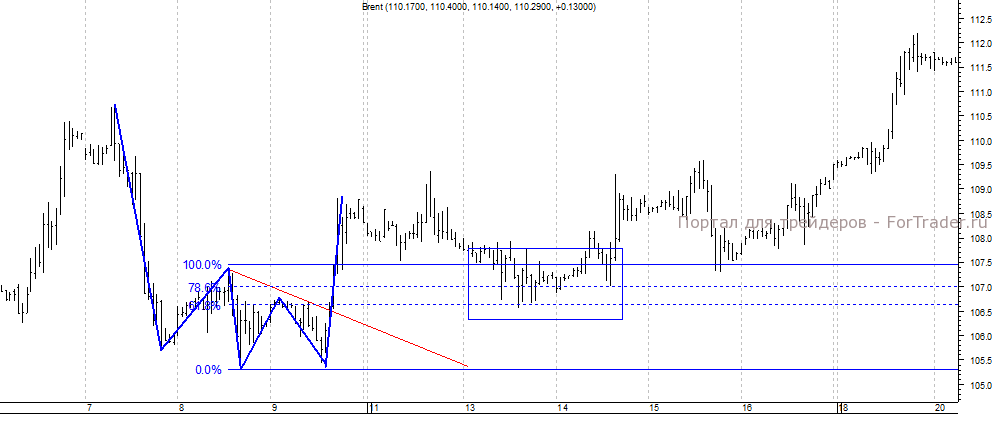
A component part of the TA ‘Head and Shoulders’ pattern, formed on the 60-minute chart of oil futures, was the harmonic Gartley pattern (61.8% correction). Its target at 78.6% later served as support. As a result, over several subsequent days, there was an accumulation process, the exit from which ended with a sharp movement in prices.
Disadvantages of Using the Technical Pattern ‘Head and Shoulders’
However, prices often find it difficult to overcome the targets set using harmonic trading models.
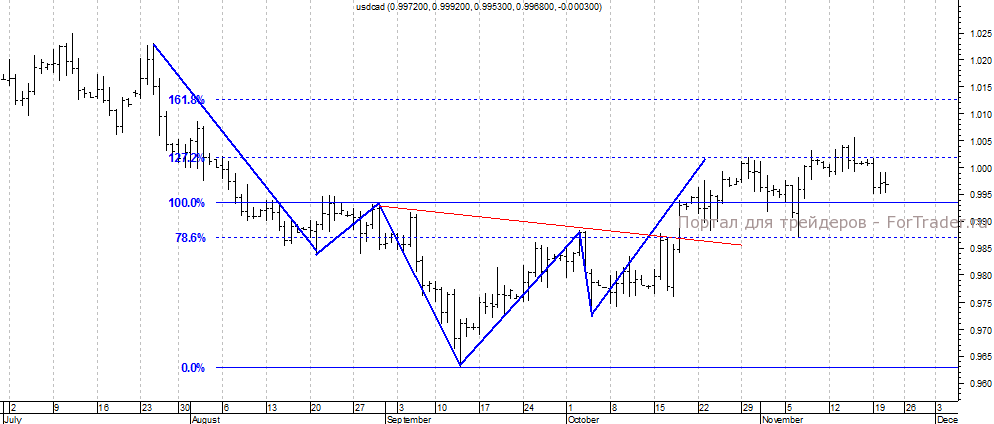
On the daily chart of the USD/CAD currency pair, the 127.2% area identified using the harmonic pattern ‘Perfect Butterfly’ remains unchallenged. The nearest support levels are at 0.9930 (100%) and 0.9870 (78.6%). If the market manages to successfully test them, a return to the long-term downward trend is quite possible. In this case, the trend reversal pattern ‘Head and Shoulders’ will not be able to fully materialize.
Thus, negative financial results related to the use of the studied graphical configuration are due not to the inefficiency of the technical analysis pattern ‘Head and Shoulders’, but to the neglect of harmonic trading principles, which allow traders to get a correct understanding of the near-term price levels.
FAQ
What is the Head and Shoulders pattern?
The Head and Shoulders pattern is a common technical analysis pattern that signals a potential trend reversal.
How does the Head and Shoulders pattern work?
The pattern consists of three peaks, with the middle peak being the highest, indicating a potential shift in market sentiment.
Can the Head and Shoulders pattern be combined with other strategies?
Yes, combining the Head and Shoulders pattern with harmonic trading principles can enhance trading accuracy and profitability.