


Be a Trader: Fundamental Analysis
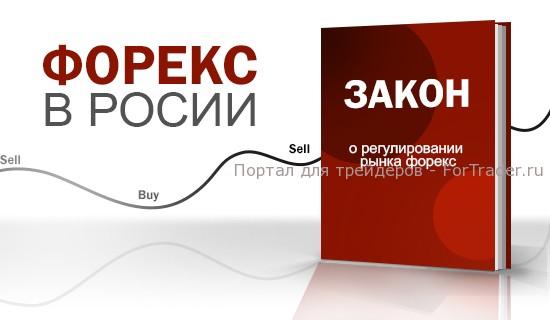
Transactions involving the buying and selling of currencies are purely financial in nature and must be regulated by the government. The characteristics of regulation directly depend on the jurisdiction under which these operations fall.
Other Articles in Stock Market Basics
- Christmas rally: A stock market holiday miracle
- Master Classes – IPO: Profit or Loss?
- Inflation and Deflation: Two Sides of the Same Coin
The Legal Framework for Financial Transactions
It is worth noting that providing “foreign exchange dealing services on the Forex market” itself is not licensed anywhere. This type of operation usually has a broader meaning: operations with foreign currencies, futures contracts, and gambling activities. Based on this, ForTraders.org points out the need to apply state supervision and regulation to them.
Evidently, transactions on the Forex market involve provisions of laws on currency control. Depending on the country, these provisions may vary.
The difference, it should be noted, is significant. In countries with strong currencies, such as the euro or dollar, currency control measures do not exist at all. In countries with non-convertible or limited convertible currencies, the situation is the opposite. There are serious restrictions on transactions with foreign currencies, which act as obstacles to foreign exchange dealing.
At first glance, it may seem that transactions on the foreign exchange market and the stock market are identical, but this is not the case. Assets traded on these markets differ in most parameters. Unlike securities, the quality of traded currencies does not require any form of control by the state.
Therefore, the main principles of regulation of the stock market generally do not apply to the foreign exchange market, and different governmental organizations monitor transactions on these markets. In Russia, for example, this includes the Central Bank of Russia and the Federal Commission for Securities Markets.
Dealing Centers: A Game of Chess
Theoretically, everything looks good, but Slavs are not a people who strictly follow rules and laws. As the Prime Minister of the Russian Empire, P.A. Stolypin, said, in Russia, the strictness of laws is compensated by the lack of enforcement. To organize foreign exchange dealing across the territories of the CIS countries, a solution was developed that can be boldly classified as clever. It transfers issues of currency transactions into a completely different legal plane. It should be noted that this approach is mainly characteristic of the many dealing centers that have sprouted like mushrooms after rain, where real currency transactions may not even occur.
In such dealing centers, all client transactions are processed on the server belonging to the dealing center. Only some transactions are sent to the interbank market, and only in exceptional cases when there is a threat of a significant imbalance between the volumes of buy and sell orders. In most cases, clients of these dealing centers simply play against each other and the dealing center itself, which sets the current quotation values. Essentially, this is an organization of an “economic game” with real money.
In other words, a person who considers themselves a “foreign exchange trader” is essentially placing a bet on the change in the exchange rate of a currency and either loses or wins. Thus, this activity is considered a certain type of gambling business, for which dealing centers obtain the appropriate license.
Naturally, the possibility of this option arises from the broad definition of gambling business by the state, which includes such operations. In countries with a well-established legal culture, the legislation always draws a clear boundary between the financial and gambling sectors.
There is no need to mention that for those who want to engage in foreign exchange trading on the Forex market seriously, this approach is absolutely unsuitable.
How to distinguish a real Forex broker from a pseudo-dealing center is a topic for another discussion. The activities of Forex brokers who send client transactions to the real market are strictly regulated by the corresponding financial regulators, about which you can learn more on our site.“,
“excerpt”: “Learn how financial transactions on the Forex market are regulated by governments and the role of dealing centers.”,
“slug”: “forex-market-regulation”,
“faq_html”: “
FAQ
What is Forex market regulation?
Forex market regulation refers to the rules and oversight imposed by governments and regulatory bodies to ensure fair and transparent trading practices.
Why is Forex market regulation important?
Regulation helps protect traders from fraud, ensures market integrity, and maintains stability in financial transactions involving currencies.
What are dealing centers and how do they operate?
Dealing centers are entities that facilitate foreign exchange transactions. They often operate by matching trades internally rather than executing them on the real interbank market, which can pose risks for traders.
”