



Euro Declines Following Mario Draghi’s ECB Press Conference
ECB President Mario Draghi’s remarks on April 10, 2019
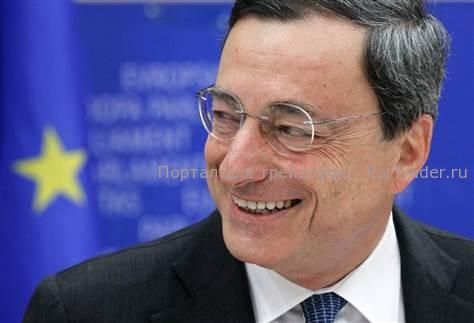
During his press conference, ECB President Mario Draghi noted that the eurozone economy continues to face headwinds from external factors, though the impact of certain internal challenges has diminished significantly. The ECB identified clear evidence that European economic growth is slowing. However, the bank assesses recession risks as very low.
Regarding the TLTRO program, further details will be disclosed at upcoming meetings as the ECB Governing Council sees a need for additional analysis of current conditions.
About Mario Draghi
Mario Draghi (born September 3, 1947) served as President of the European Central Bank (ECB) from November 2011. The Italian economist previously held the position of Governor of the Bank of Italy from 2005 to 2011.
The European Central Bank (ECB) is the central bank of the European Union and the eurozone, responsible for implementing and controlling monetary and currency policy across the region. It maintains economic stability and supports the euro as a global reserve currency, second only to the US dollar.
Any statement from Mario Draghi receives close attention from financial markets. Comments regarding potential shifts in monetary policy or economic conditions are analyzed by traders and often trigger significant movements in euro pairs, particularly EUR/USD. Draghi’s speeches have historically caused substantial market reactions and are always marked as important events in economic calendars.
Key ECB Statements and Market Reactions
- April 10, 2019: Euro declined following Draghi’s press conference
- July 26, 2018: ECB guidance weakened euro by 0.5%
- June 19, 2018: Draghi’s remarks pressured EUR/USD lower
- June 14, 2018: ECB policy decisions weighed on euro
- March 8, 2018: ECB action followed by mixed market response
- January 25, 2018: Draghi’s comments accelerated euro strength
- December 14, 2017: ECB guidance disappointed forex markets
- October 26, 2017: Euro weakness after Draghi’s remarks
- September 7, 2017: ECB meeting outcomes delayed market rally
- July 20, 2017: ECB signaled future policy decisions ahead
- May 29, 2017: Draghi’s clarity disappointed euro investors
- March 9, 2017: Euro gained on ECB meeting results
- February 6, 2017: Draghi’s dovish tone pressured euro lower
- January 19, 2017: Soft ECB rhetoric weakened EUR/USD
- December 8, 2016: ECB decisions disrupted EUR/USD stability
- October 20, 2016: ECB held rates steady; QE tapering not discussed
- September 8, 2016: ECB meeting saw investor hesitation and EUR/USD weakness
- July 21, 2016: Draghi indicated ECB readiness for economic reassessment in coming months. Q2 GDP growth expected lower than Q1 2016. Risk balance tilted negative. Inflation to remain low but rise through 2017-2018.
- June 2, 2016: Draghi’s remarks both disappointed and inspired markets
- March 10, 2016: ECB cut rates to 0.00% and expanded QE; EUR/USD fell
- January 21, 2016: Euro declined after ECB meeting; Draghi signaled policy easing for March
- December 3, 2015: Draghi’s speech boosted EUR/USD as markets reacted to QE surprise
- October 31, 2015: Draghi’s remarks raised questions about QE continuation
- October 22, 2015: Euro collapsed as ECB discussed deposit rate cuts
- September 23, 2015: Draghi’s speech raised questions about euro weakness strategy
- September 3, 2015: Draghi’s remarks sparked euro decline despite no QE expansion hints
- July 16, 2015: Draghi confirmed ECB program proceeding as planned
- June 3, 2015: ECB meeting results prompted euro buying
- May 14, 2015: Draghi commented on potential QE adjustments
- April 15, 2015: Draghi addressed concerns regarding QE program
- March 23, 2015: Draghi hinted at QE extension
- March 5, 2015: Draghi released updated eurozone forecasts and QE commentary
- January 22, 2015: Draghi announced QE program to begin March 2015 and end September 2016
- December 4, 2014: ECB maintained key rate at 0.05%
- November 21, 2014: Draghi’s speech addressed increased asset purchase volumes
- November 17, 2014: Draghi noted weak eurozone recovery momentum
- November 6, 2014: ECB held main rate unchanged
- October 9, 2014: Draghi outlined reforms for eurozone recovery
- October 2, 2014: ECB decided on covered bond and asset-backed securities purchase programs
- September 22, 2014: Draghi indicated accommodative policy would persist
- September 4, 2014: ECB Governing Council unanimously approved unconventional stimulus measures
- August 22, 2014: Draghi stated weak euro would support eurozone economy
- July 3, 2014: Draghi noted ECB cannot and should not act monthly
- June 5, 2014: Draghi indicated rates would remain unchanged long-term
- May 8, 2014: Draghi signaled readiness for action at next meeting
- April 24, 2014: Draghi indicated ECB could deploy asset purchase program
- April 3, 2014: Draghi did not rule out further monetary easing
- March 6, 2014: Draghi noted narrowing gap between German and peripheral economies
- February 6, 2014: Draghi stated no deflation in eurozone
- December 5, 2013: Draghi distinguished eurozone situation from Japan
- November 7, 2013: Draghi indicated rates had not reached lower bound
- October 2, 2013: Draghi declined to weaken euro deliberately
- September 23, 2013: Draghi stated low rate risks currently absent
“,”excerpt”:”Mario Draghi’s April 2019 ECB press conference triggered euro weakness as he highlighted slowing eurozone growth and external economic headwinds, though recession risks remained low.”,”short_description”:”ECB President Mario Draghi’s press conference on April 10, 2019 caused the euro to decline as he noted slowing growth and external pressures on the eurozone economy.”,”faq_html”:”
FAQ
Who is Mario Draghi and what is his role?
Mario Draghi served as President of the European Central Bank from November 2011 to 2019. As ECB head, he controlled monetary policy for the eurozone