



After three consecutive months of growth, Canada’s GDP fell by -0.5% month-over-month (0.0% year-over-year) in September 2015, marking the first stagnation in six years. The quarterly growth in annual terms was 2.3%, below the Bank of Canada’s forecast of 2.5%.
The decline in Canada’s economy was recorded in the resource sector and oil and gas extraction, which is obviously related to falling commodity prices. The manufacturing sector dropped by -1.5% month-over-month, while the services sector fell by -0.1% month-over-month.
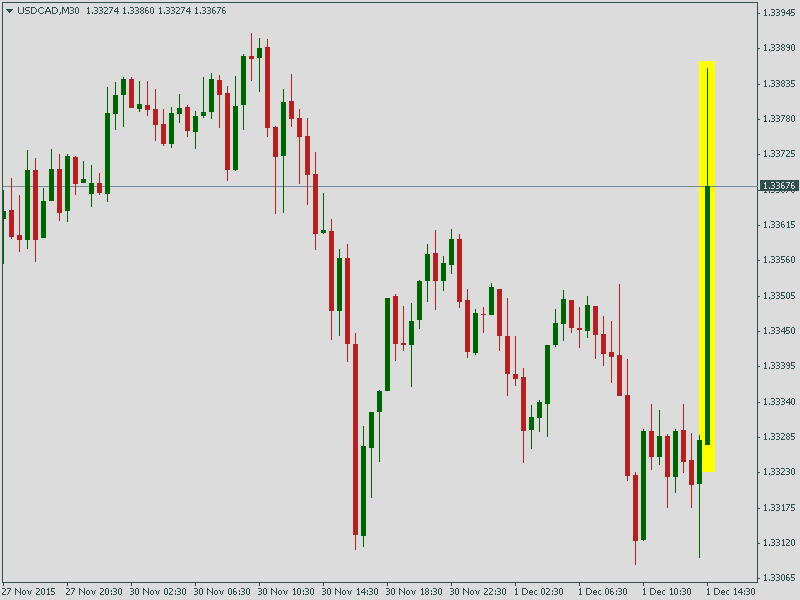
Recent statements from the Governor of the Bank of Canada, Stephen Poloz, that the country’s economy should begin to recover have not been confirmed, increasing the likelihood of additional stimulus measures from the regulator as the situation worsens. This explains why USD/CAD quotes are returning to recent multi-year highs around 1.343.
Discuss Forex Trading on the Forum
- Current Situation, Discussion and Forecasts for Forex (EURUSD, USDJPY, GBPUSD, USDCHF, AUDUSD, NZDUSD)
Current News and Forecasts
- Bet on the Ruble in the EUR/RUB Pair After the ECB Meeting: Target – 65.0 RUB per Euro
- What If Selling CHF Is More Advantageous Than Selling EUR After the ECB Meeting?
- Euro Exchange Rate at the ECB Meeting on December 3rd: What Everyone Expects
- Forex Forecast for the EUR/USD Pair for the Week of November 30 – December 4
FAQ
What caused the rise in USD/CAD?
The rise in USD/CAD was due to Canada’s GDP falling to -0.5% in September 2015, signaling economic stagnation.
How did the Canadian economy perform in September 2015?
Canada’s GDP fell by -0.5% month-over-month in September 2015, marking the first stagnation in six years.
What impact did the weak GDP have on USD/CAD?
The weak GDP data led to a significant increase in USD/CAD, with the pair rising to 1.338 from 1.332.