



EN fortrader
24 November, 2025

Ross Hook: Designing a Unique Trading System

Дмитрий Демиденко
RU EN

Dmitry Demidenko, trader, iLearney instructorFrom the masterclass “Be a Trader with iLearney”

As many traders note, the simpler the strategy, the more logical its application, and the less subjective the identification of signals and reasons to reject them. Such strategies, free from doubt and essentially human bias, can be the most effective—whether operated by a robot or a human trader.

Fundamentals of a Trading Strategy

In this context, combining key elements of trading systems based on Ross hooks and the “Holy Grail” strategy by Linda Raschke and Larry Connors can allow you to build your own unique trading system.

Where is the simplicity if one strategy is complicated by another? Actually, simplification is achieved by omitting the filters described by the original authors. Let’s try to avoid using ADX and “trader’s tricks,” constructing a strategy based purely on the price chart and moving averages.

To begin, recall that a Ross hook refers to the failure of a bullish (or bearish) market to hold a new high (or low). In other words, it is an unsuccessful test followed by a pullback. Since these chart patterns require a trending market, it’s important to select the most effective entry point. A moving average can assist with this.
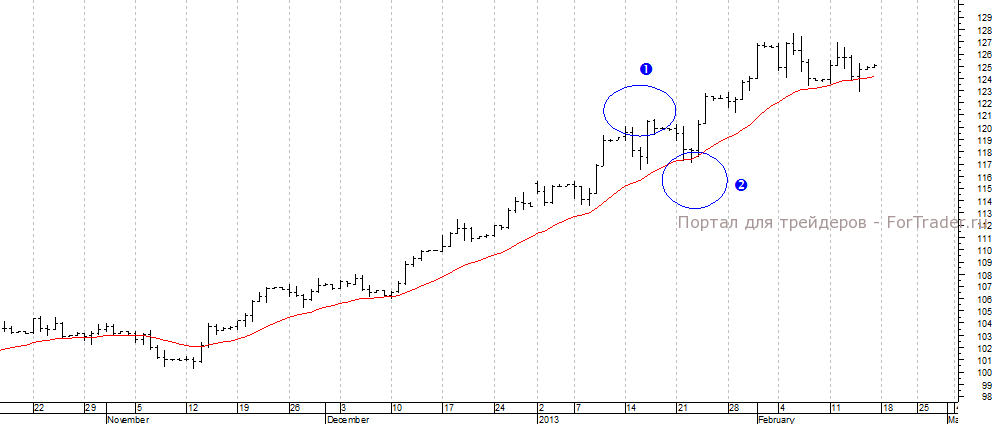
Fig. 1. Using moving average to select entry point.

In mid-January of this year, amid a bullish trend, the EUR/JPY currency pair failed to stay above a previously formed high, resulting in a pullback (point 1 in Fig. 1). Using the EMA21 as dynamic support, you can find the optimal entry point when the test fails, confirmed by the closing price of the breakout bar. If this close is above the moving average, the trader has grounds to apply this strategy (point 2 in Fig. 1).

Additional Elements of the Trading Strategy

No trading system is complete without defining where to place the protective stop order and identifying the target level at which profits will be secured.

While risk limitation is fairly straightforward—stop loss is placed below the previously formed low around 92.2 yen per dollar for the relevant currency pair—take profit is more complex. Neither Linda Raschke and Larry Connors nor Joe Ross provide clear recommendations on this. Thus, profit targets can be set using profit factors, trailing stops, or even fundamental levels such as the Y100 level referenced by the Japanese government.

Regardless, a successful entry spares the trader many difficulties. The combined strategy also allows the use of a second screen to identify this.
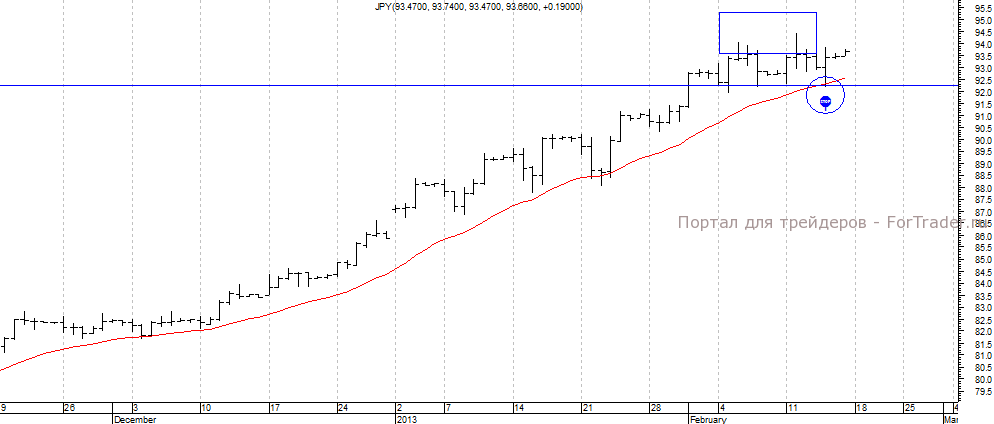
Fig. 2. Defining stop loss and take profit levels.

Two-Screen Method for Opening Positions

First, on a smaller timeframe, mark a horizontal line corresponding to the EMA(21) level on the daily chart.

At the identified support area, pay attention to emerging chart patterns. Specifically, on hourly charts showing the USD/JPY pair’s movement, a pattern underlying the Anti-Turtles trading system appeared. By applying Victor Sperandeo’s 2B principle, the trader could optimally capitalize on the opportunity by opening a position from the high of the test bar of the previous market bottom (see Fig. 3).
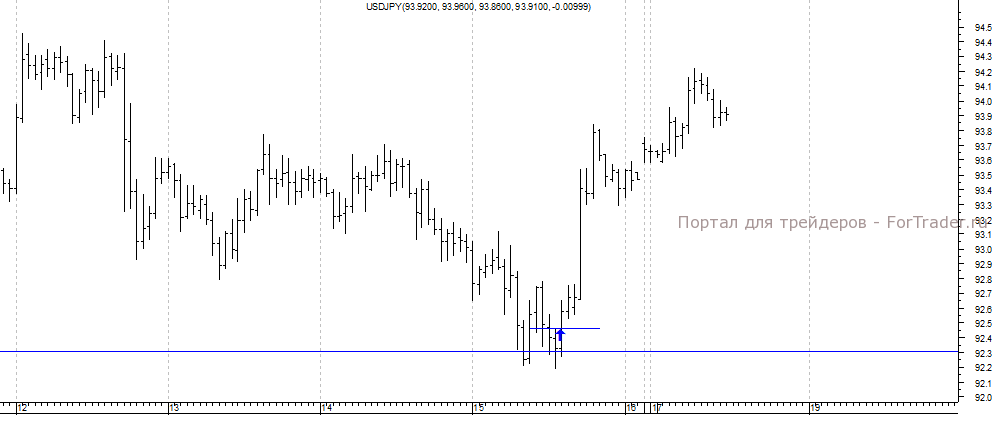
Fig. 3. Determining the entry point.

Thus, by combining well-known strategies and adding your own elements, such as a second screen, a trader can develop a unique trading system characterized by moderate risk and high potential profitability.


Subscribe to us on Facebook

Fortrader contentUrl Suite 11, Second Floor, Sound & Vision House, Francis Rachel Str. Victoria Victoria, Mahe, Seychelles +7 10 248 2640568

More from this category

All articles

Test on Understanding Forex Market Basics

Test your knowledge of the currency market. Check yourself to identify gaps still affecting your trading.

How Forex Brokers Work Under the Agency Model

In the previous article, we described that the agency model of a Forex broker involves routing ALL client trades to the interbank market. This process is quite complex, involving numerous participants and stages. It encompasses both a technical process for selecting the best prices and executing trades, and a financial one that converts figures into […]

How to Create a Trading Robot If You’re Not a Programmer: 8 Steps from Idea to Implementation

A trader’s brain doesn’t function quite like an ordinary person’s. Someone far from financial markets acts rationally and predictably. But when a person obsessed with candlestick patterns gets involved, the outcomes become much harder to foresee. Common trader flaws include skewed life priorities and heightened impulsiveness. Trading itself becomes the ultimate goal, and the biological […]

The Best Way to Lock Positions: 3 Expert Opinions on Forex Locks

,alignnone size-new-theme-post-size wp-image-233121" src="https://files.fortraders.org/uploads/2017/08/locking-forex-730x379.jpg" alt="Position locking and locks in forex" width="730" height="379" />In order to close a lock, in addition to market analysis and a clear forecast for the currency pair, you need the broker to have suitable conditions for this. For example, some companies do not have the ability to partially close an opposing position, which greatly complicates opening a lock, especially if an equal lock is used.A very common mistake is when a trader opens a locking order of a larger volume than the initial positions in order to reduce losses when the price moves against the initial orders. Such a lock is extremely dangerous: if the price direction changes, the situation will immediately worsen, and losses will grow faster.Also, many traders make a psychological mistake. As soon as any lock trade shows a profit, and there is a possibility that the price will not go further, most traders' nerves fail, and they quickly close the profitable lock position, thereby undermining the structure. When using locking in your trading, you need to know well how to exit it correctly.As market analysis shows, non-retracement (or with minor corrections) price movement in one direction of more than 500 pips occurs only 1-2 times per year. To set a lock at this level, the account drawdown should be no more than 45%, otherwise there will not be enough free funds to open an opposing order. Statistically, the probability of a pullback at this level is several times higher. Therefore, it is better to "sit out" such moments than to set a lock. Of course, you can set a lock without waiting for a non-retracement trend of 500 pips. But in this case, you will constantly be in a suspended state and deal with locks. In most cases, when you are mentally ready to set a lock, the price will be on the verge of a reversal.The expediency of using position locking in Forex is absent. Whatever the situation with the currency pair, the alternative to a lock will always be a stop-loss or simply "sitting out" losses with averaging at important levels.Furthermore, do not forget that if swaps are negative, such a lock will only increase losses, and on some currency pairs, the size is very significant. Yes, one of the swaps may be positive, but even in this case, the size of the negative will be larger, and losses will still increase.The only acceptable option for a reasonable trader to use a lock is to set it not on a losing trade, but on a profitable one. When an open position is generating good profit but a correction is approaching, instead of closing the trade, you can set a lock, thereby fixing the profit. At the moment when the price resumes movement in your favor, the opposing order is closed, and the profit on the previously opened trade continues to grow. It is psychologically much easier to work with such a lock than with a losing one.

Recent educational articles

All articles

The editor recommends

All articles
Loading...