



Many so-called orthodox traders smile condescendingly when the topic of Bitcoin trading comes up. Technically, cryptocurrency trading does not differ from trading regular currencies or other assets. However, there is no central bank whose chairman can step in to clarify the situation and prospects on the Bitcoin market, no key news… In short, it’s exotic.
The situation changed in 2017 when the Bitcoin to dollar rate demonstrated a stunning rise, reaching $3000 per unit. Many both novice and experienced traders decided to take a closer look at the digital currency. We will conduct a small crypto crash course that will allow you to learn everything most essential about Bitcoin.
- nt
- Who invented Bitcoin?
- Why did the Bitcoin rate rise so much?
- How many Bitcoins can be ‘printed’?
- When will Bitcoins run out?
- Can Bitcoins become the world currency, replacing traditional money?
- Is it profitable to mine Bitcoins yourself?
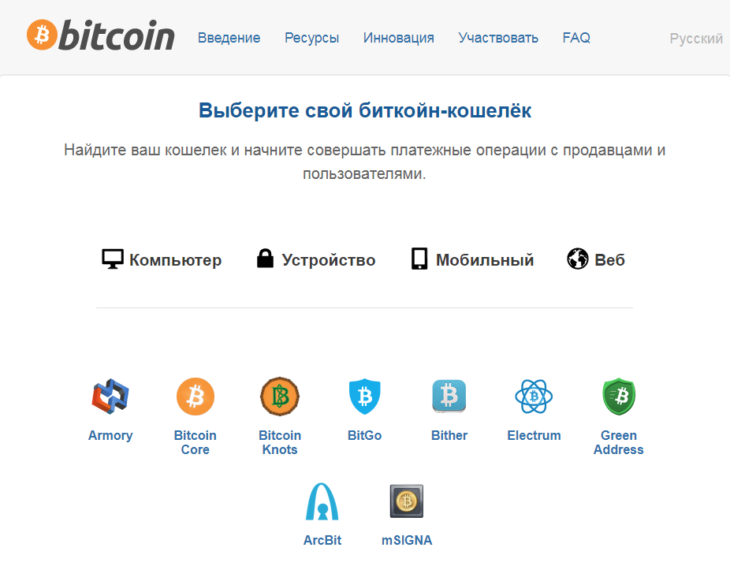
- How to create your own Bitcoin wallet?
- How to earn on Bitcoin?
- How does the publication of news and macroeconomic indicators affect the Bitcoin rate?
- Does technical analysis work when trading the Bitcoin/dollar pair?
- Scalping and Bitcoin are incompatible
- Frequent gaps
- Which trading sessions are best suited for trading Bitcoins?
- Are there trading strategies for Bitcoins?
- Is it worth starting to trade Bitcoin?
nt
nt
nt
nt
nt
nt
nt
nt
nt
nt
nt
nt
nt
nt
Who invented Bitcoin?
Bitcoin was first introduced to the public in 2009 by a person who called himself Satoshi Nakamoto. Whether this is a real person or a group of people hiding behind the pseudonym is unknown. Satoshi Nakamoto communicated only through forums and email.
In the last few years, no statements have come from Satoshi Nakamoto. Nevertheless, the original Bitcoin network rules and software he created still work, and the network is structured so that its creator has the same rights as other users.
Bitcoin – money for criminals and terrorists?
The Bitcoin cryptocurrency has no physical form and, roughly speaking, is a digital code. Naturally, the first users of Bitcoin were people with high computer literacy, as well as individuals with legal issues.
The media also harmed Bitcoin’s image. A persistent association was created with an online store for buying drugs, similar to the anonymous trading platform ‘Silk Road.’ Additionally, Bitcoin exchanges, particularly Mt. Gox, were repeatedly targeted by hackers, which damaged Bitcoin’s reputation.
Nevertheless, saying that only criminal elements use Bitcoins is false. The areas of cryptocurrency use are expanding. More and more organizations, trading platforms, and services worldwide accept Bitcoins for payment.
Why did the Bitcoin rate rise so much?
As known, cryptocurrency is completely decentralized. It is not tied to any country, central bank, political, or economic situation. The first impetus for the Bitcoin rate growth was speculation.
In March of this year, the media widely covered information that the US Securities and Exchange Commission would approve the first Bitcoin ETF. However, the SEC did not make such a decision, citing concerns about the lack of transparency and regulation on Bitcoin exchanges and markets.
Despite this, the popularity of electronic currency among speculators gained momentum, allowing the Bitcoin to dollar rate to update its historical maximum above $3000, though it later dropped somewhat to $2500.
How many Bitcoins can be ‘printed’?
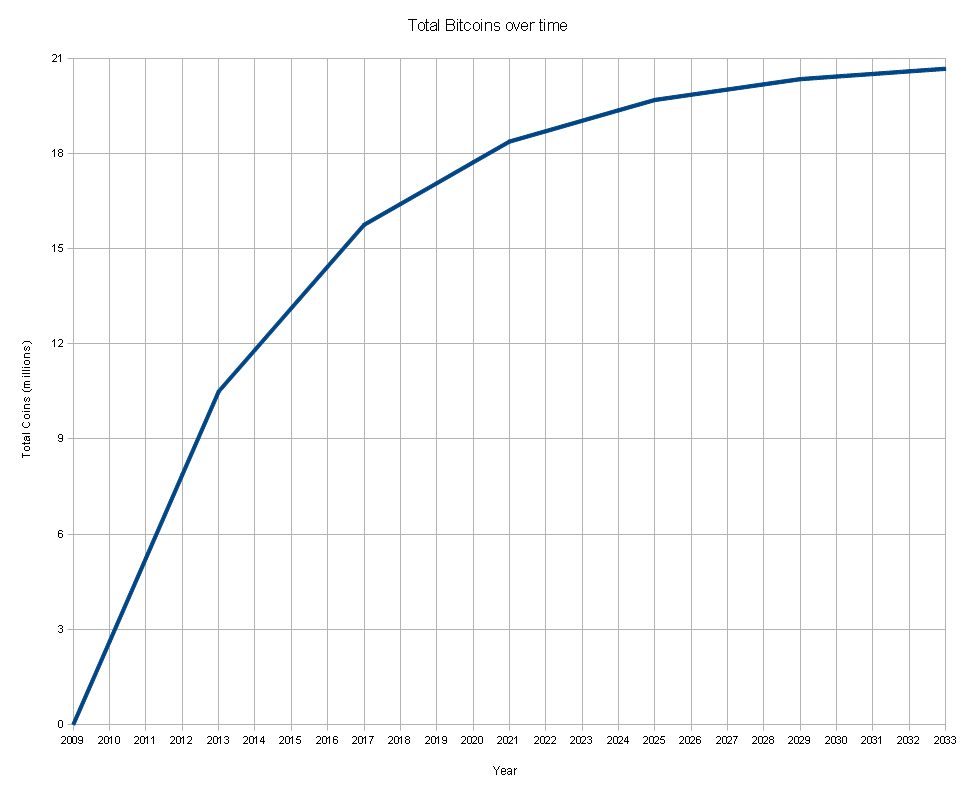
Cryptocurrency is often called ‘digital gold.’ There is a clear analogy – the number of Bitcoins, like gold reserves on the planet, is limited. The Bitcoin network, conceived by Satoshi Nakamoto, is designed for 21 million Bitcoins, after which its existence will be sustained by transactions and fees.
It is necessary to understand that mining or extracting Bitcoins is a very complex process. Mathematically, Bitcoin is a hash function with a large number of answer variants, but the sought-after one is the so-called ‘beautiful’ hash, characterized by starting with 15 zeros. In other words, the network calculates all possible hash variants, and as soon as it finds a ‘beautiful’ one, it announces that the block is solved. At that moment, coin emission occurs, credited to the miner who found the block. The block records all transactions, and the network continues calculating the hash in search of the next value.
Naturally, this is a very simplified explanation ‘on fingers.’ In reality, it is much more complex. Here’s a short video on how a Bitcoin farm works.
When will Bitcoins run out?
Currently, finding one block across all available capacities takes about 10 minutes, and its value is 12.5 Bitcoins. Additionally, the block value depends on their quantity – approximately every four years, or about 200 thousand blocks, the payout per block halves. For example, until the summer of 2016, a block was worth 50 Bitcoins, and in about 123 years, its value will drop to zero when the last Bitcoin is ‘mined.’
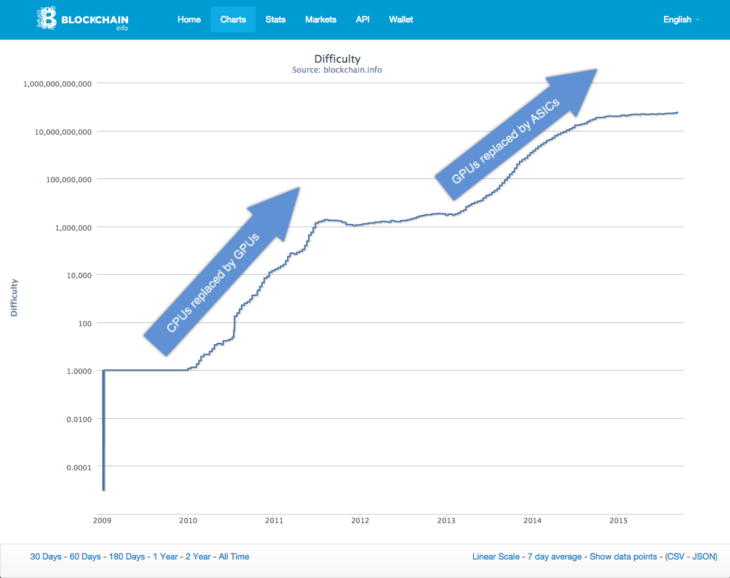
Moreover, the Bitcoin network is structured to strictly maintain emission timelines and volumes of new coins. This became possible thanks to the parameter introduced by Satoshi Nakamoto in the task formula called difficulty. If the Bitcoin network’s performance starts to grow and finding a block takes less than 10 minutes, every 2016 blocks, a check mechanism activates, assessing the block-finding speed and network power. If they deviate from the set values, the calculation difficulty increases to return everything to the desired parameters.
Thus, the Bitcoin network self-regulates, preventing deviations from the emission schedule and protecting against a potential cryptocurrency collapse in case of miner collusion.
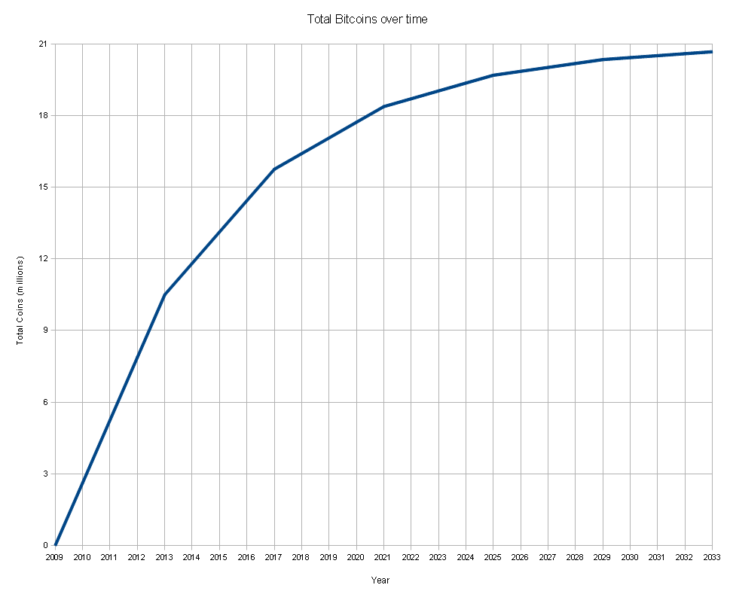 Fig. 1. Graph of Bitcoin quantity growth.
Can Bitcoins become the world currency, replacing traditional money?
As we mentioned abov