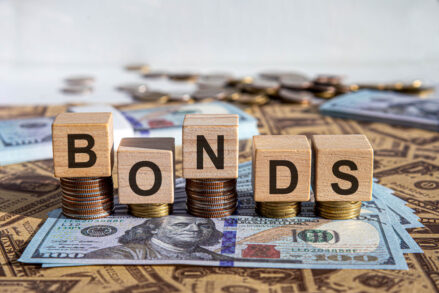




Bond (Latin: obligato – obligation) is a type of bearer security. It represents the borrower’s commitment to repay the loaned funds at a specified term with agreed interest.
When issuing a bond, a government or company essentially takes a loan from the buyer. The bondholder receives annual income in the form of a fixed interest rate. A key feature is that the bond must be redeemed within the term set at issuance.
In financial markets, bonds are also known as bonds.
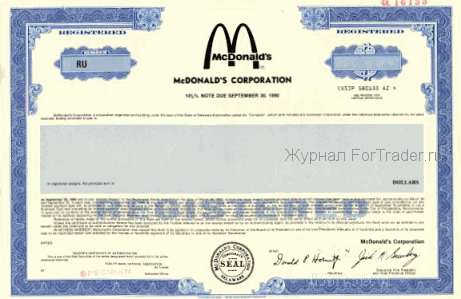 McDonald’s Company Bond
What Are Bonds?
Bonds function like loans: a fixed sum is lent with planned returns. Unlike traditional loans, they simplify transferring to new holders and require no collateral. Investments range from 1 to 30 years.
Types of Bonds
By issuer type, there are three main categories:
- Corporate bonds obligate a company to repay debt and interest to holders on schedule.
- Government and municipal bonds work similarly, but the debtor is a government entity.
By maturity term:
- Short-term (3 to 12 months);
- Medium-term (1 to 5 years);
- Long-term (over 5 years);
- Perpetual or everlasting bonds.
By financial backing:
- Coupon bonds pay periodic interest (coupons).
- Zero-coupon or discount bonds pay no interest but are sold below face value.
- Classic or unsecured bonds backed only by the issuer’s credit rating.
- Secured bonds backed by the issuer’s assets.
By income type:
- Discount bonds have no coupon; profit comes from the difference between face value and market price, which rises toward maturity. They trade less than other types.
- Fixed-rate bonds pay coupon income at a constant rate, typically every 4 months (sometimes quarterly or otherwise).
- Floating-rate bonds have variable coupons tied to benchmarks like refinancing rates; issued less frequently than fixed-rate.
How Bond Yields Are Paid
Yield payments depend on bond type.
For fixed-rate bonds, income is paid as stated interest periodically (e.g., annually or quarterly). Example: A 1000 ruble bond at 8% annual rate over 5 years yields 80 rubles yearly, totaling 400 rubles.
Floating-rate bonds tie to benchmarks like refinancing rates. Example: 1000 ruble bond over 3 years at refinancing rate +1%, with rates 6%, 7%, 8% yields 70+80+90=240 rubles.
Mixed-type bonds pay part fixed, part floating. Discount bonds have no rate; yield is the discount. Example: 2000 ruble face value sold at 1000 rubles yields 1000 rubles at maturity.
What Is the Bond Market?
Government and corporate bonds trade freely on the secondary securities market, similar to stocks.
Bonds are tiered into echelons: first (blue chips), second, and third, based on issuer size, stability, and reliability.
First-echelon bonds (e.g., Gazprom, Rosneft, Sberbank in Russia) offer lower yields but higher repayment guarantees than second or third tiers.
Bond Examples
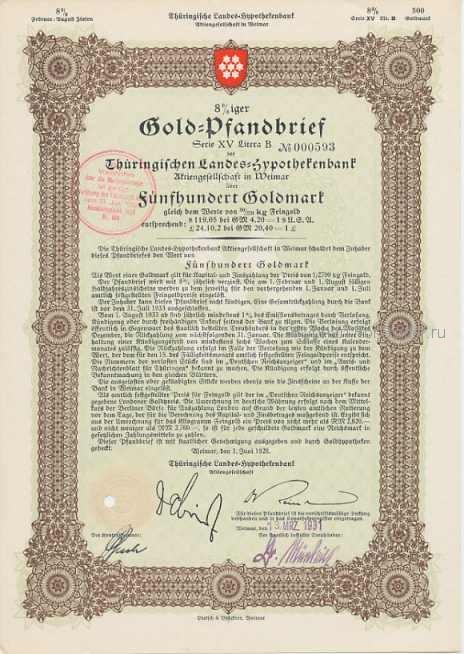 Vintage foreign bond from 1931
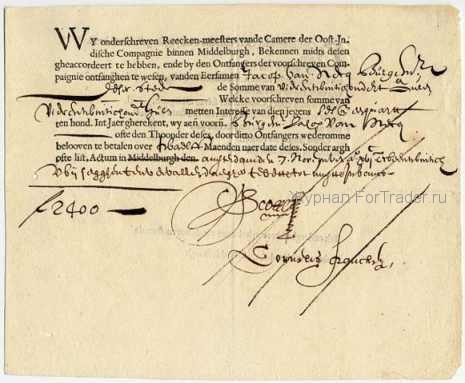 One of the oldest known bonds
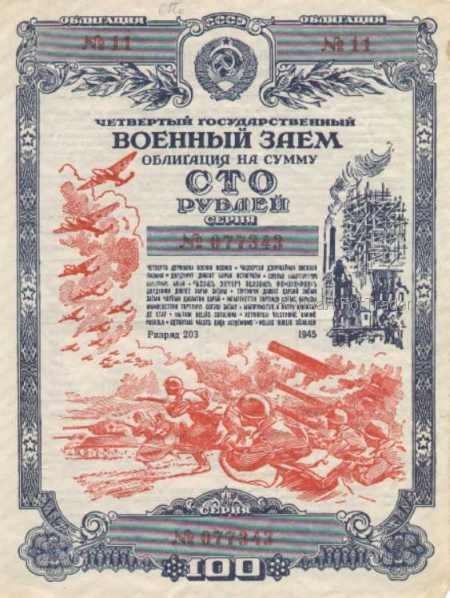 Soviet bond
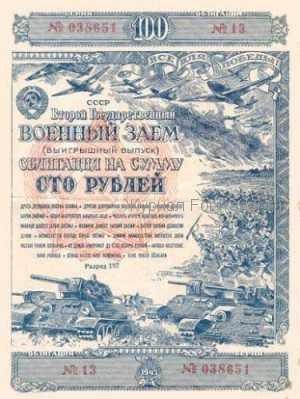 War bond
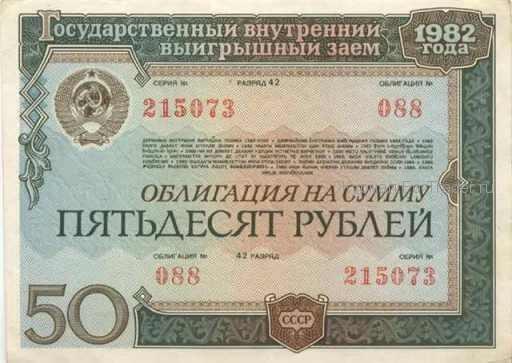 Winning loan bond
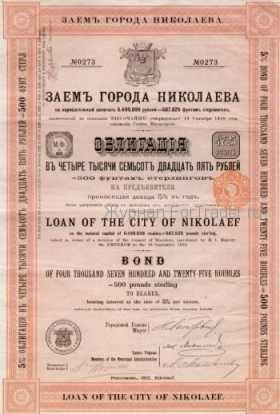 City of Nikolaev bond
These examples show the wide variety of bonds. For more on vintage bonds, check numismatics sites.
FAQ
What is the difference between government and corporate bonds?
Government bonds are issued by states for public funding and considered lower risk; corporate bonds fund companies and offer higher yields but more default risk.
How do zero-coupon bonds generate returns?
Zero-coupon bonds are sold at a discount to face value; profit is the difference received at maturity, with no periodic interest payments.
What affects bond yields on the market?
Yields depend on issuer credit rating, maturity term, interest rate type (fixed/floating), and market echelon, with blue chips offering lower but safer returns.