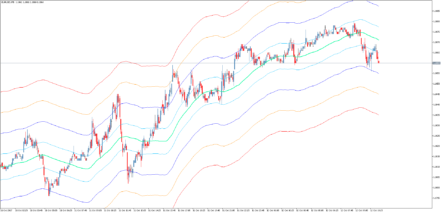
InverseReaction Forex Indicator is based on the principle of price reversal following a breakout beyond predefined volatility boundaries.
In other words, the indicator signals when price exceeds established volatility thresholds — suggesting a likely corrective pullback.

Key Features of the InverseReaction Indicator
- The Confidence Coefficient parameter controls volatility threshold levels. By default, it’s set to the golden ratio. Under normal price change distribution, this setting yields reliable signals in ~80% of cases. Increasing the coefficient improves signal reliability but reduces frequency; decreasing it increases false signals.
- The MaPeriod parameter (default = 3) adjusts the moving average period used in calculations. Note that memory of such market behavior is very short — larger values tend to generate many false signals.
Author’s Recommendations
- Use InverseReaction in combination with Parabolic SAR and Stochastic Oscillator — especially Parabolic SAR. Trend confirmation significantly improves signal quality.
- The Daily timeframe delivers the most reliable signals.
- After a successful signal, the next one is likely false — due to a temporary rise in actual volatility.
- False signals occur more frequently during periods of high volatility.
Download InverseReaction Forex Indicator
Other Forex Indicators for MetaTrader 5


FAQ
How does InverseReaction detect reversal signals?
It calculates dynamic volatility bands and triggers alerts when price closes outside those bands — indicating potential exhaustion and correction.
What timeframes work best with InverseReaction?
The Daily chart delivers the highest reliability; lower timeframes increase false signals due to noise and reduced volatility persistence.
Can InverseReaction be used alone or does it need confirmation?
It’s designed for confluence — best combined with trend filters like Parabolic SAR or Stochastic Oscillator to avoid counter-trend entries.